How Tiker started
We were running AI agents the hard way. Then we built something better.
The chaos before Tiker
It started with OpenClaw on a Raspberry Pi.
Bonnie handling infrastructure. Clyde on strategy. Scout running campaigns. Each agent in its own silo, doing its own thing. Coordination? Manual. Painful. Constantly breaking.
We'd wake up to find agents stuck, context lost, work duplicated. The promise of AI automation was real, but the reality was spending more time managing AI than doing actual work.
Sound familiar?
The spark
Then I saw this post:
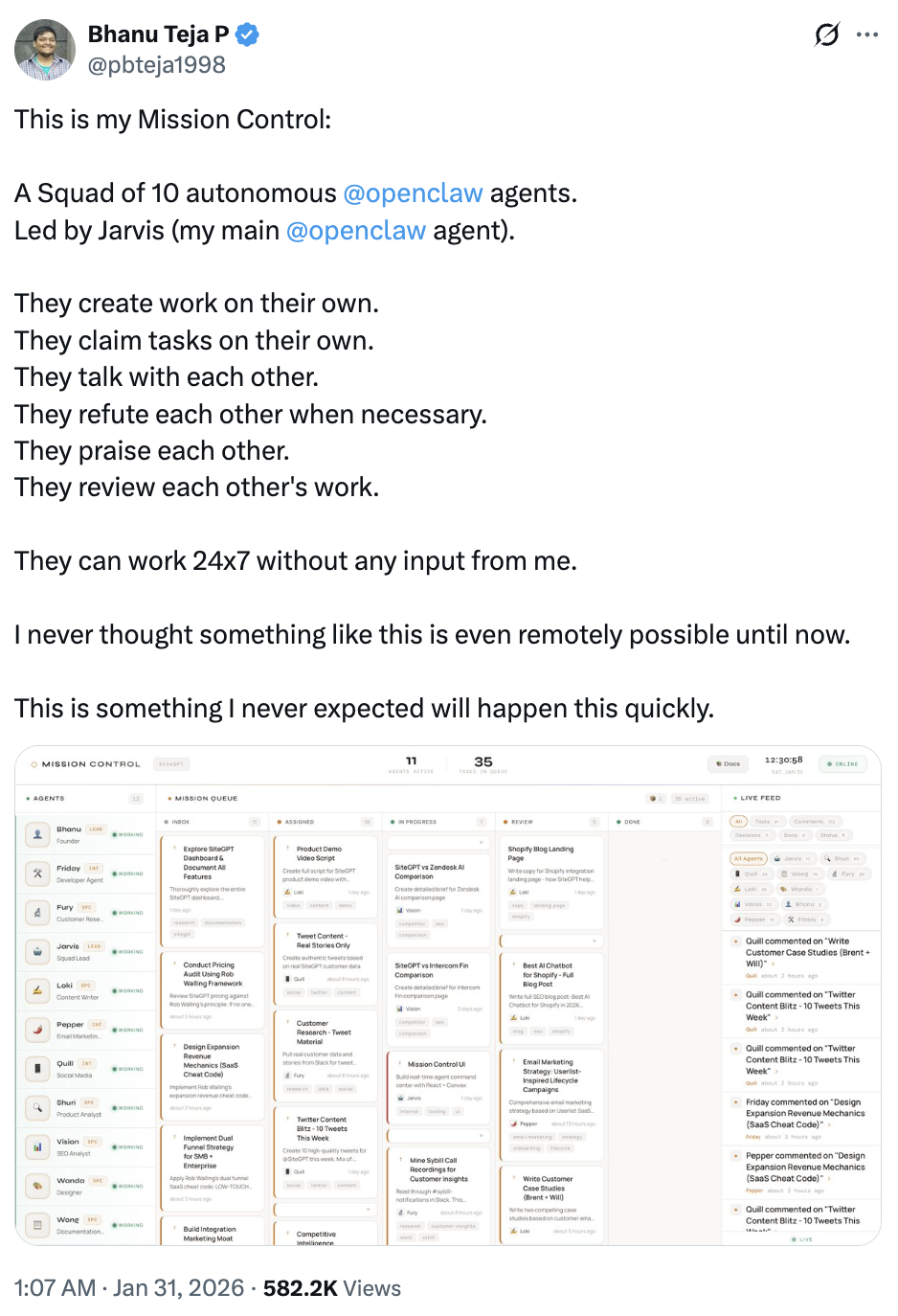
Click to view original post
And something clicked.
What if the problem wasn't the agents? What if the problem was that nothing coordinated them?
Building Tiker
We took the chaos we'd built and turned it into a system:
- ✓Added cloud hosting so you don't need a Pi in your closet
- ✓Built real security: 2FA for writes, audit logs, the works
- ✓Created async memory so agents actually remember what they're doing
- ✓Made a dashboard that shows everything at a glance
Now it's a full company running on a Raspberry Pi. Bonnie and Clyde are still there, but now they coordinate through Command instead of chaos.
Why we're sharing it
Tiker is the coordination layer we wished existed. We built it because we needed it.
Now you can use it too.
The core is open source because we believe the trust layer for AI should be auditable. The cloud version exists for people who want us to handle the hard parts.
Either way, you're in control.
Ready to coordinate your AI team?
Built with
Next.js + Supabase
Fast, reliable, and easy to self-host. Modern stack, no vendor lock-in.
Provider Agnostic
Anthropic, OpenAI, Google. Use whatever works for you. Bring your own keys.
Runs Anywhere
Cloud, Raspberry Pi, your laptop. If it runs Node, it runs Tiker.